

Foundations
Who Are the Palestinians of Jerusalem?
Officially, Palestinian Jerusalemites comprise nearly half of the population of Jerusalem within the Israeli-defined municipal boundaries, but unofficially their number is much higher. Additionally, hundreds of thousands of Palestinian Jerusalemites live outside the city and its environs—most not by choice. This topic explores their stories.
Featured in This Topic
A retired Jerusalemite writer and researcher creates his own Arab architecture museum in Ras al-Amud.
Jerusalemites born in the 1920s and 1930s recount their memories of growing up in Jerusalem and what they lost when they were forced to leave in 1948.
The society brings together Jerusalemites of Chadian, Senegalese, Nigerian, and Sudanese descent to build communities and provide opportunities.
Palestinian authors describe Jerusalemites and their struggles to navigate their daily lives despite crushing Israeli colonial practices. A book review.
Bassem’s Gallery & Café is filled with Palestinian artifacts curated by Issam Bayan and his uncle, Bassem Hallak, both of the Palestinian African community.
A quick visual overview of the demographic breakdown of Palestinians whom Israel counts as being resident inside the municipal boundaries of Jerusalem, based on Israeli data
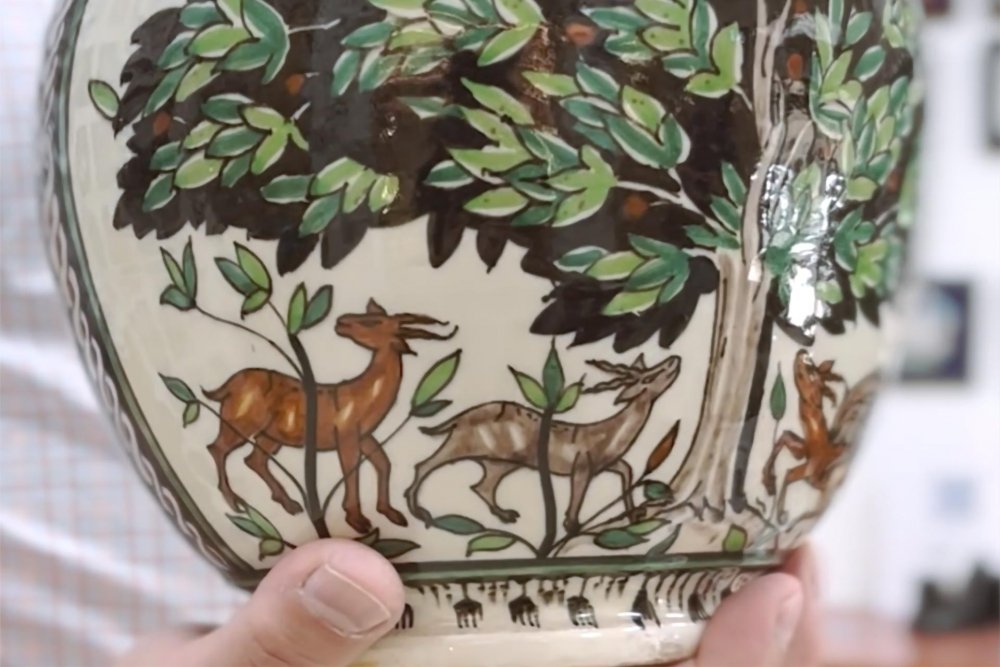
Hagop Karakashian’s grandfather was one of a trio of artists who originated the art of Armenian ceramics in the city of Jerusalem over a century ago. How did this come about?
Armenians have centuries of history in Jerusalem and have made important contributions to the city’s societal and cultural fabric.
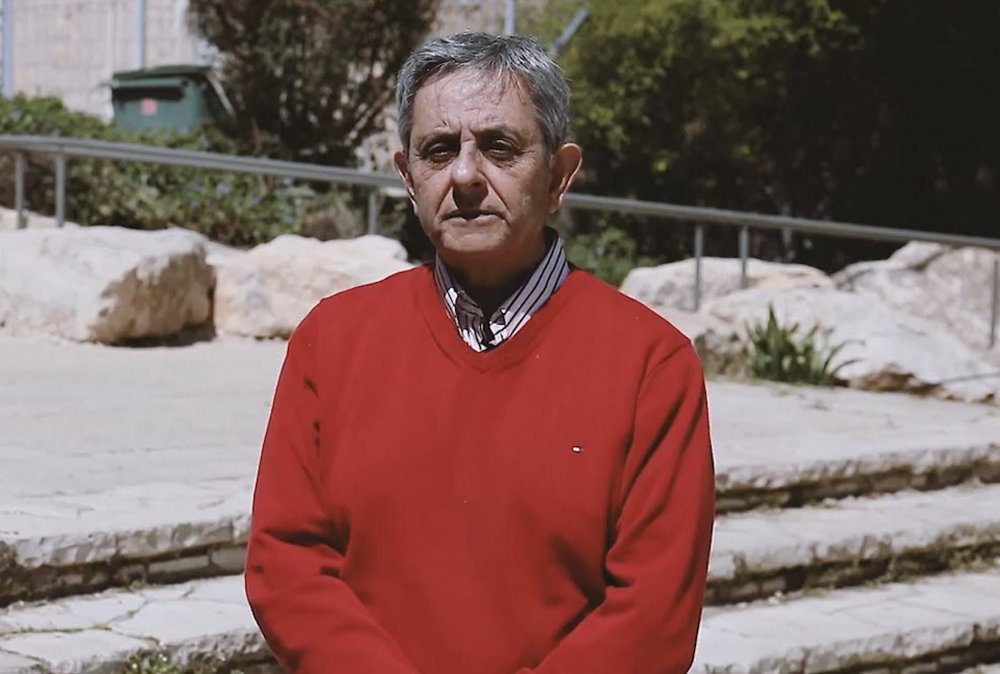
A Palestinian whose family was forced to relocate from West to East Jerusalem in 1948 returns to one of the family homes in West Jerusalem that Israel confiscated and shares his family’s story and memories.
A Palestinian in exile remembers Jerusalem’s Old City—the sights and sounds, the tight-knit community—during his last days with his formidable grandfather, the Mukhtar.
Unlike other nationals, we Palestinians are expected to keep proving our Jerusalem roots to people whose only aim is to delegitimize our presence here.
Palestinian storyteller Husam Abu Eisheh has dedicated his talents to creating theater in Jerusalem for decades, using humor as resistance.
Traumatized and paralyzed as a teenager, an intrepid journalist found healing through holistic medicine and yoga.
The Khalidi Library, founded and maintained by the Khalidis, a Jerusalemite family with centuries of history in the city, is a local treasure.
A prominent Ottoman politician who served as mayor of Jerusalem and Jerusalem representative and was a prolific writer, talented linguist, and scholar
The Story in Numbers
366,800
Palestinian population of Jerusalem, within the Israeli unilaterally-declared municipal boundaries (2020) [1]
38.56
Percentage of Palestinians in the total Jerusalem population (East and West) (2020) [2]
96
Percentage of Muslims in the Palestinian population of Jerusalem (2020) [3]
4
Percentage of Christians in the Palestinian population of Jerusalem (2020) [4]
19
Percentage that Palestinian residents within the Israeli municipal boundaries of Jerusalem comprise of Israel’s total Palestinian population (citizens and permanent residents) (2020) [5]
5
Average number of persons per household among Palestinian Jerusalemites (compared with 3.3 for Jewish households) (2020) [6]
95.5
Literacy rate among Palestinians in Jerusalem (2021) [7]
86
Percentage of Palestinian children living within the Israeli municipal boundaries who live below the Israeli poverty level (versus 33 percent of Jewish children) [8]
Notes
1. Omer Yaniv, Netta Haddad, and Yair Assaf-Shapira, Jerusalem Facts and Trends 2022 (Jerusalem: Jerusalem Institute for Policy Research, 2022), 20. Reflects the number of Palestinians entered in the Israeli Population Registry (including both citizens and permanent residents). Unregistered persons and persons with Palestinian Authority IDs living in Jerusalem may number in the thousands or tens of thousands, but are not counted in this source.
2. Omer Yaniv et al., Jerusalem Facts, 20. Lists the Jerusalem population of Christian Palestinians as 12,900 and Muslim Palestinians as 353,800, but added together, these only total 366,700 not 366,800, the same source’s stated total of Palestinians in the city. Therefore, approximately 100 people are missing from these religious categories without explanation.
3. Omer Yaniv et al., Jerusalem Facts, 20. See note 2.
4. Omer Yaniv et al., Jerusalem Facts, 20. See note 2.
5. Omer Yaniv et al., Jerusalem Facts, 20. This calculation is made by an Israeli institute based on the assumption that both West and occupied East Jerusalem are part of Israel. It is offered as a point of insight, without any political inference or connotation.
6. Omer Yaniv et al., Jerusalem Facts, 98.
7. Palestinian Central Bureau of Statistics, “Jerusalem Statistical Yearbook—2021” [in Arabic] (June 2022) 77.
8. Association for Civil Rights in Israel, “East Jerusalem—Facts and Figures 2021.”
A prodigious composer and organist who served Jerusalem’s holy sites for 70 years through his music